BUFFALO TECHNOLOGY Wle Hg Dyg Uni Directional Antenna Wle-hg
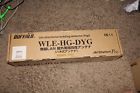
( Brand: Buffalo Technology ), ( Model: WLE-HG-DYG ), ( Part Type: Antenna ), ( Directivity: Uni Directional ), ( Network Connectivity: Wireless-wi-fi 802.11g ), ( Frequency Range: 2.4ghz )
Review BUFFALO TECHNOLOGY Wle hg dyg Uni directional Antenna
The Buffalo WLE-HG-DYG Uni-Directional Antenna is a high-performance wireless networking device designed to enhance the reach and reliability of your wireless signal. This antenna is ideal for use in environments where a focused, directional signal is required, such as point-to-point connections, wireless backhauls, or in areas with significant signal interference.
Made of durable materials, the Buffalo WLE-HG-DYG Uni-Directional Antenna features a compact and lightweight design, making it easy to install and mount on a pole or wall. It boasts a gain of 15 dBi, which means it can effectively amplify the wireless signal, increasing its range and reducing the chances of signal loss or degradation.
The antenna is also weather-resistant, with a rugged construction that can withstand various environmental conditions, including rain, snow, and high winds. It operates on the 5 GHz frequency band, which is less congested than the 2.4 GHz band, ensuring faster data transfer speeds and less interference.
The Buffalo WLE-HG-DYG Uni-Directional Antenna is easy to set up and configure, with a simple plug-and-play design. It requires no additional software or drivers, making it a hassle-free solution for extending your wireless network coverage.
In summary, the Buffalo WLE-HG-DYG Uni-Directional Antenna is a powerful and reliable wireless networking tool that can significantly improve the performance of your wireless network in challenging environments. Its directional design, high gain, and weather-resistant construction make it a versatile and durable solution for a wide range of applications.
Pros of Buffalo WLE-HG-DYG Uni-Directional Antenna:1. Directional Focus: This antenna focuses its signal in one direction, reducing interference from other networks and improving signal strength in the desired direction.
2. Long Range: The uni-directional antenna design allows for longer range coverage, making it ideal for rural or remote locations where other signals may be weak.
3. Cost-Effective: The Buffalo WLE-HG-DYG is a more affordable option compared to omni-directional antennas that cover a wider area but may not offer as much signal strength.
4. Easy Installation: The uni-directional antenna is easy to install and adjust, allowing users to point it in the direction of the strongest signal for optimal performance.
Cons of Buffalo WLE-HG-DYG Uni-Directional Antenna:1. Limited Coverage Area: Since the antenna is focused in one direction, it will not provide full coverage for a larger area. This may require multiple antennas to be used for complete coverage.
2. Requires Accurate Positioning: To get the best performance, the antenna needs to be positioned accurately to face the source of the signal. This may require some trial and error to achieve the desired results.
3. Limited Flexibility: Since the antenna is focused in one direction, it cannot be used to boost signals in multiple directions at once.
Conclusion:The Buffalo WLE-HG-DYG Uni-Directional Antenna is a cost-effective solution for improving signal strength in rural or remote locations. Its directional focus and long-range capabilities make it an excellent choice for users who need to boost their Wi-Fi signal in a specific direction. However, users should be aware of its limited coverage area and required accurate positioning to achieve the best performance. If coverage for a larger area is needed, multiple antennas may be required.
Recommendation:If you are looking to improve your Wi-Fi signal in a rural or remote location, the Buffalo WLE-HG-DYG Uni-Directional Antenna is a great option to consider. Its directional focus and long-range capabilities make it an excellent choice for boosting signals in a specific direction. However, users should be aware of its limited coverage area and required accurate positioning to achieve the best performance. If coverage for a larger area is needed, multiple antennas may be required.
Details:
9 mile range 3km of each device outdoor directional antenna is connected. 14 FBI yogi directional antenna frequency range of 2,401-2,484mhz channels 1-11 applications are for 1:1 communication or 1:n This item has never been out of the box. It is left over from a project.
specifications directionalantennaa:
- brand: Buffalo Technology
- model: Wle-hg-dyg
- part type: Antenna
- directivity: Uni Directional
- network connectivity: Wireless-wi-fi 802.11g
- frequency range: 2.4ghz
Returns directionalantennaa:
- policy: no returns
Offer directionalantennaa:
- best offer: false
- bids: 0
- quantity: 1
- Sold: 0
- Started: August 2, 2017, 9:24 am
Ratings:
- Quick response and fast payment. Perfect! THANKS!! 06-26-17
- Quick payment. Hope to work with you again soon. Thanks 05-28-17
- Great communication. A pleasure to do business with. 06-13-17
- Thanks 06-13-17
- Hope to deal with you again. Thank you!! 05-22-17
Payments directionalantennaa:
- PayPal
Shipping directionalantennaa:
- handling: 1 days
- type: Calculated
Seller directionalantennaa:
- city: Rancho Cucamonga, California
- zipcode: 91730
General directionalantennaa:
- computers tablet's networking > enterprise networking servers computers tablet's networking > directional antennas enterprise networking servers
- in stock: Yes
- condition: New
Buffalo Technology WLE-HG Is Similar To:
- Wle-da2 747464092440 Buffalo Technology Airstation 9dbi Gain Directional Antenna W Connector Wle-rmc (51% similar) 11G b wireless devices to increase signal gain up to 2 times and boost wireless performance. 4 ghz the long 9 ft. 11G b wireless supports MC and RP NC interfaces connector included adjustable antenna face angle wall or desk mount easy to install, no software needed ft. Wle MC couplet is included for...(March 22nd, 2016)
- Wle-hg-ndc Buffalo Airstation Pro 7dbi (33% similar) ...(March 13th, 2017)
- Wle-op-ant Buffalo Ap Option Antenna For Corporate (40.8% similar) Ship without RI-ion battery removed from item. Buyers need to send item us in japan repair with warranty own all shipping cost. Li-ion battery some countries Germany,France,Italy,Mongolia,slink,turkey,Nigeria and more. So items have only Japanese manual menu language. Please if you would like to ...(June 4th, 2021)