CAMBRIDGE COMMUNICATION SYSTEMS U-24U-N-W Ccs Metnet ASY0287 Organizing 24GHZ Microwave Backhaul System 5G Infrastructure
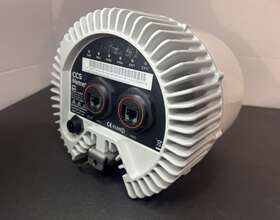
( Brand: Cambridge Communication Systems ), ( Manufacturer Part Number: U-24U-N-W ), ( Model: ASY0287 ), ( Type: Backhaul System ), ( Unit Type: Unit ), ( Network Connectivity: Wireless ), ( Wired-ethernet: Rj-45 )
Review CAMBRIDGE COMMUNICATION SYSTEMS Ccs Metnet Self organizing 24ghz Microwave Backhaul System 5g Infrastructure
The Cambridge Communication U-24U-N-W CCS MetNet is a state-of-the-art self-organizing 24GHz microwave backhaul solution designed specifically for 5G infrastructure. This innovative device is engineered to deliver high-capacity, low-latency wireless connectivity, making it an ideal choice for telecom operators, service providers, and enterprises seeking to deploy next-generation wireless networks.
The U-24U-N-W CCS MetNet features a compact, lightweight design that allows for easy installation and maintenance. It uses advanced, frequency-agile technology to provide robust, interference-free connectivity, ensuring reliable and uninterrupted transmission of data. The device supports multiple channels and uses adaptive modulation and coding to optimize performance based on the specific wireless environment.
One of the standout features of the U-24U-N-W CCS MetNet is its self-organizing capabilities. This means that the device can automatically configure itself to work in harmony with other nearby devices, reducing the need for manual interference and ensuring seamless, efficient network operation. The device also includes advanced automation and failover mechanisms to ensure that connectivity is maintained even in the event of equipment failure or network disruptions.
The U-24U-N-W CCS MetNet is also highly energy-efficient, using less power than traditional microwave backhaul solutions. This not only reduces energy costs but also helps to lower the device's carbon footprint, making it an environmentally responsible choice for operators and enterprises.
In summary, the Cambridge Communication U-24U-N-W CCS MetNet is a cutting-edge 24GHz microwave backhaul solution designed for 5G infrastructure. Its compact design, frequency-agile technology, and self-organizing capabilities make it a highly efficient and reliable choice for wireless connectivity. Its energy-efficiency and eco-friendly design also make it an environmentally responsible choice for operators and enterprises seeking to deploy next-generation wireless networks.
Pros of buying Cambridge Communication U-24U-N-W CCS Metnet self-organizing 24GHz microwave backhaul for 5G infrastructure:1. High-speed data transmission: The U-24U-N-W CCS Metnet supports 24GHz frequency band, which is suitable for high-speed data transmission required for 5G networks.
2. Self-organizing capability: The backhaul system is self-organizing, which means it automatically adjusts its operation based on network conditions, ensuring optimal performance and reducing the need for manual intervention.
3. Scalability: The system can be easily scaled up or down based on the requirements of the network, making it a flexible solution for various deployment scenarios.
4. Advanced error correction: The backhaul system uses advanced error correction techniques, ensuring reliable data transmission even in challenging environments.
5. Cost-effective: Compared to other backhaul solutions, microwave backhaul is generally more cost-effective, especially for long-distance and point-to-point connections.
Cons of buying Cambridge Communication U-24U-N-W CCS Metnet self-organizing 24GHz microwave backhaul for 5G infrastructure:1. Limited range: Microwave backhaul has a limited range compared to other backhaul solutions, such as fiber optic. This may not be suitable for large-scale 5G networks that require extensive coverage.
2. Dependence on weather conditions: Microwave backhaul is susceptible to weather conditions, such as heavy rain or fog, which can affect the signal quality and reliability.
3. Limited bandwidth: Although 24GHz frequency band supports high-speed data transmission, the bandwidth may be limited compared to other frequency bands, such as millimeter wave (mmWave), which is also used for 5G networks.
4. Interference potential: Microwave backhaul is susceptible to interference from other wireless devices, which can affect its performance and reliability.
Conclusion:The Cambridge Communication U-24U-N-W CCS Metnet self-organizing 24GHz microwave backhaul is a reliable and cost-effective solution for 5G infrastructure, particularly for point-to-point and long-distance connections. Its self-organizing capability, scalability, and advanced error correction techniques make it an attractive option for network operators. However, the limited range, dependence on weather conditions, and potential for interference should be considered when evaluating this solution for large-scale 5G networks.
Recommendation:If you are looking for a cost-effective and reliable backhaul solution for 5G infrastructure, the Cambridge Communication U-24U-N-W CCS Metnet self-organizing 24GHz microwave backhaul is a good option to consider. However, it is recommended to conduct a thorough evaluation of your network requirements, including coverage, bandwidth, and interference potential, before making a final decision. Additionally, you may want to consider other backhaul solutions, such as fiber optic or mmWave, to ensure that you choose the best solution for your specific needs.
Details:
It operates in a single frequency channel - at 26 and 28 GHz so no radio planning is required. And the units wide 270-degree field of view ensures its not affected by pole-sway. Self-organising, self-healing links automatically re-route traffic in the event of node failure or LOS obstacles. The system polls the network continually and automatically determines optimal topology to deliver capacity where needed.
The CCS Metnet system uses LOS, area-based microwave spectrum, which is widely available in most markets. The system includes a range of synchronisation options which are enhanced through the support GPS. Designed with LTE in mind, the Metnet system accommodates evolving traffic demands. It offers low latency - averaging 150s per hop and high capacity at 1.2 GPS node.
Each node supports both Synchronous Ethernet Synced and 1588.
specifications directionalantennaa:
- brand: Cambridge Communication Systems
- mpn: U-24u-n-w
- model: Asy0287
- type: Backhaul System
- unit type: Unit
- network connectivity: Wireless
- wired-ethernet: Rj-45
seller directionalantennaa:
- detailed rating: Communication: 4.94/5, Accuracy: 4.93/5, Speed: 5/5, Charges: 4.88/5
- rating: 100.0%
- city: Alpharetta, Georgia
- # feedbacks: 1853
offer directionalantennaa:
- sold: 0
- options: Ship-to-home
- best offers: True
- quantity: 1
- started: September 29, 2023
- availability: In Stock
returns directionalantennaa:
- method: Money back
- time: 14 Days
- policy: Returns Accepted
- paid by: Buyer
shipping directionalantennaa:
- service: UPS Ground
- cost: $50.00
- carrier: UPS
- class: Standard
- transit: 6-12 Days
- type: Fixed
general directionalantennaa:
- condition: Used
- Computers/Tablet's Networking > Enterprise Networking, Servers > Directional Antennas
ratings:
- Perfeito 07-01-23
- As described. Good Communication. I would recommend seller 07-01-23
- Trying to put windows 10 on it, but still love it. 07-01-23
- Great 07-01-23
- A 07-01-23
payments directionalantennaa:
- credit card: Visa
- wallet: Apple-pay